

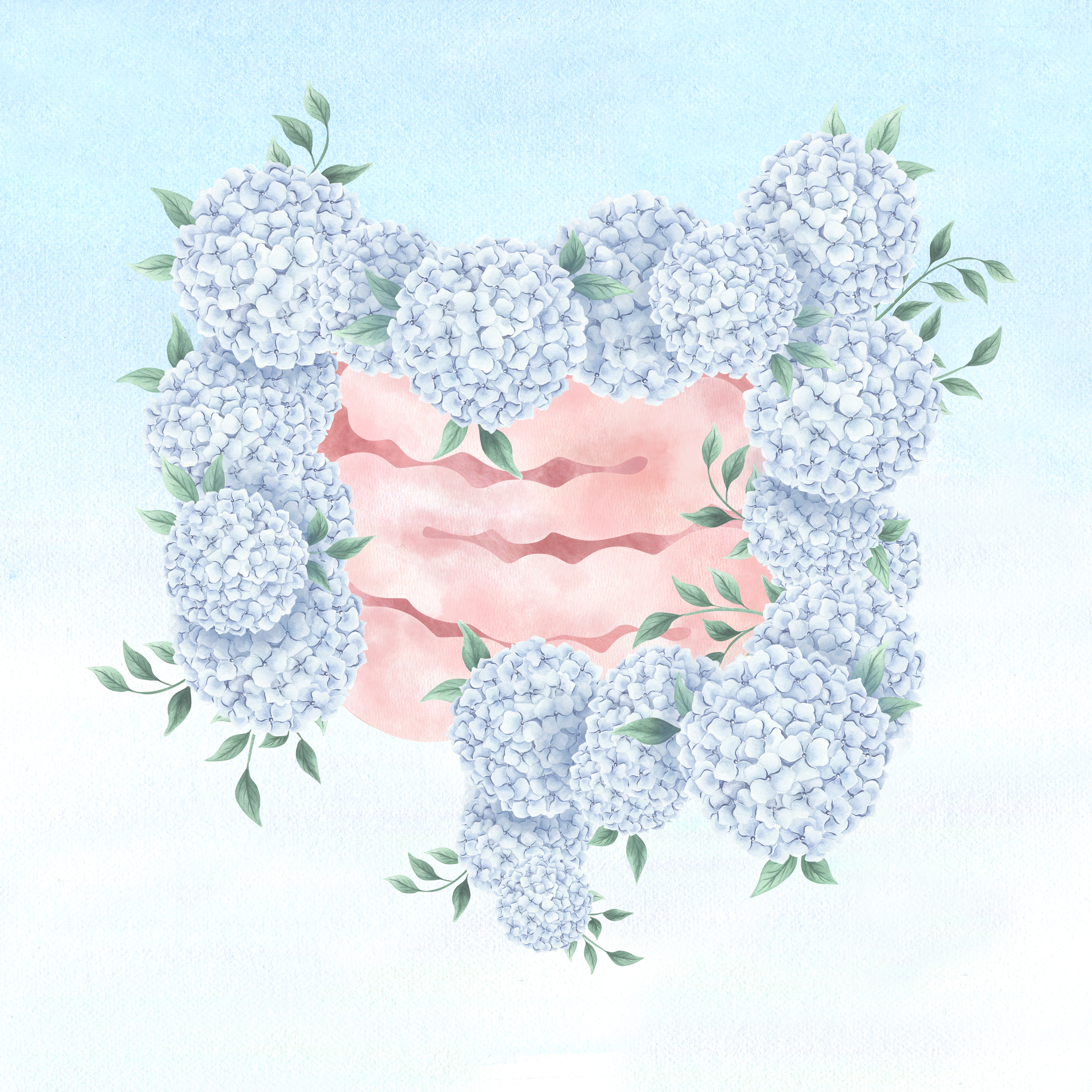
A Look into Healthy Intestines
Small Intestine
- digests food
- absorbs nutrients
- secretes enzymes and hormones
Large Intestine
- forms stool
- eliminates wastes
- houses beneficial bacteria
- absorbs water and electrolytes
When the immune system that fights infections becomes confused, it attacks the digestive system causing chronic inflammation in the intestines, which leads to the development of IBD (Inflammatory Bowel Disease), an autoimmune disease characterized by chronic, relapsing-remitting inflammation predominantly affecting the gastrointestinal tract.
The Two Main Types of IBD
IBD includes two main types: ulcerative colitis (UC) and Crohn’s disease (CD).

Crohn’s Disease
- Affected Location: can affect any part of the digestive system from mouth to anus.
- Damaged Areas: appear in multiple patches that are next to areas of healthy tissue.
- Inflammation: can penetrate the entire thickness of the walls of the gastrointestinal tract.

Ulcerative Colitis
- Affected Location: only affects the large intestines.
- Damaged Areas: are continuous (begins at the rectum and progresses upwards.)
- Inflammation: affects the inner lining of the colon.
A minority of IBD cases are difficult to distinguish due to severe inflammation. This is why consulting with a specialized gastroenterologist is crucial.
The gastroenterologist will listen to and analyze a patient’s symptoms as well as perform necessary procedures such as colonoscopy, laboratory tests, and/or specialized imaging studies to reach the correct diagnosis.
With the right diagnosis, patients can receive personalized treatment plans to alleviate their symptoms and improve their quality of life.
Reference:
- Tontini GE, Vecchi M, Pastorelli L, Neurath MF, Neumann H. Differential diagnosis in inflammatory bowel disease colitis: state of the art and future perspectives. World J Gastroenterol. 2015 Jan 7;21(1):21-46.


