


How to diagnose and monitor IBD:

Endoscopy, where doctors visually examine the digestive tract, remains the gold standard for diagnosing and monitoring IBD like Crohn’s and ulcerative colitis.

Doctors also use biomarkers, which are substances that can be objectively measured in the body, often through blood, stool, or urine samples, to diagnose and monitor IBD, without the need for repeated invasive endoscopies.
Why are inflammatory biomarkers important?
Inflammatory biomarkers are essential for doctors to diagnose, assess, treat, and monitor IBD throughout the disease course.
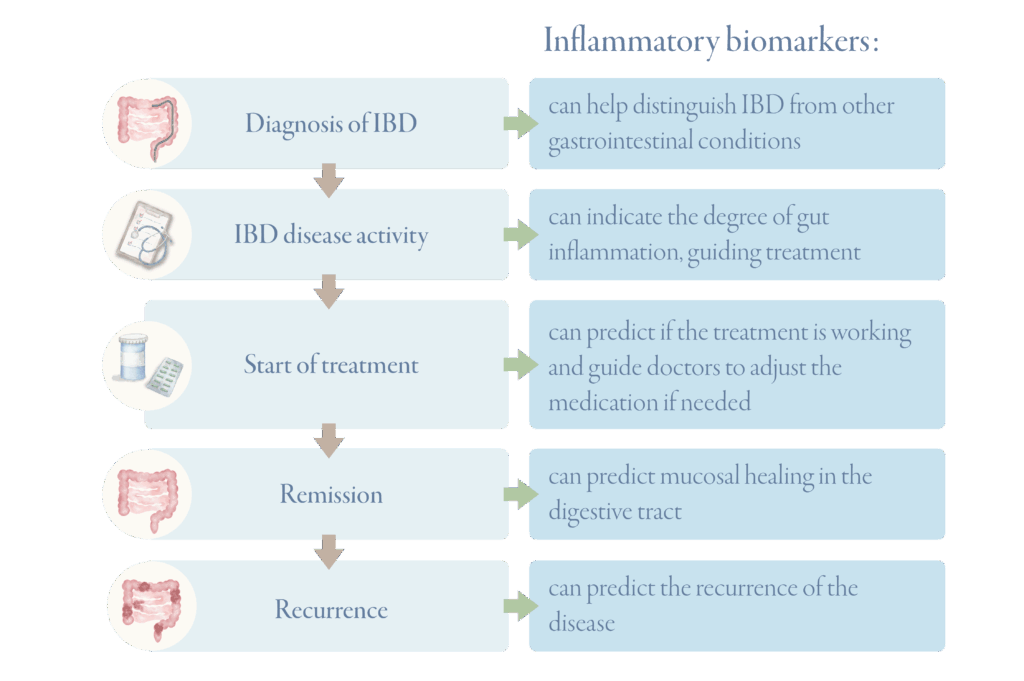
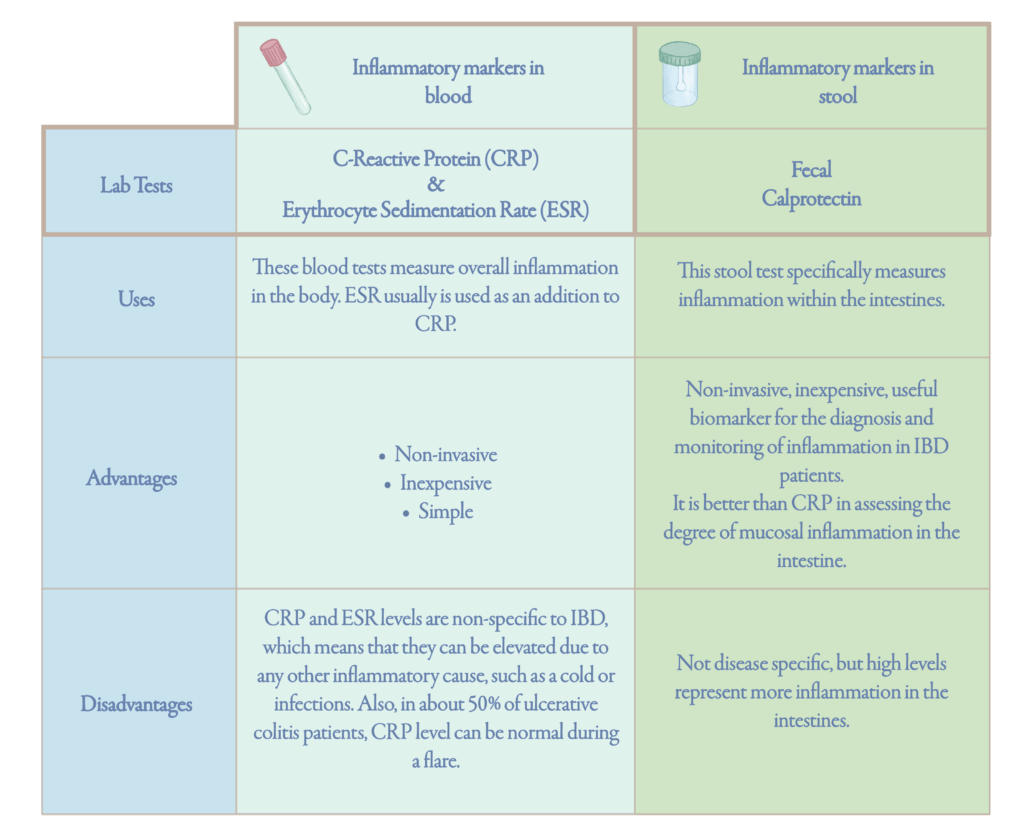
What are some of the commonly measured inflammatory biomarkers?

Are inflammatory biomarkers enough for assessing & managing IBD? Biomarkers are essential tools, and they work best when used together with other methods to provide a complete picture of IBD. Doctors will utilize all the resources available to help patients manage their condition at every step.
Regularly checking inflammatory biomarkers, symptoms, and endoscopy findings will give the doctor a comprehensive view to customize treatment.
Assessing and managing IBD requires a combination of tools. Doctors use biomarkers like CRP, ESR, and fecal calprotectin as well as other biomarkers to evaluate IBD activity and guide treatment.
High levels can signal a flare-up, while normal/low levels suggest reduced inflammation and treatment efficacy. However, these tests have limitations, and new innovative biomarkers are being researched. Since these biomarker levels can change over time depending on disease status, it is typically recommended to check them regularly.
Consult your doctor to determine the appropriate frequency of testing based on your individual condition. Staying informed on the role of these markers empowers patients to partner with their healthcare team in managing this complex condition.
References:
D’Incà R, Sturniolo G. Biomarkers in IBD: What to Utilize for the Diagnosis? Diagnostics (Basel). 2023 Sep 13;13(18):2931.
Dragoni G, et al. Biomarkers of Inflammation in Inflammatory Bowel Disease: How Long before Abandoning Single-Marker Approaches? Dig Dis. 2021;39(3):190-203.
Liu D, et al. Inflammatory bowel disease biomarkers. Med Res Rev. 2022 Sep;42(5):1856-1887.
Sakurai T, Saruta M. Positioning and Usefulness of Biomarkers in Inflammatory Bowel Disease. Digestion. 2023;104(1):30-41.
Shi JT, Chen N, Xu J, Goyal H, Wu ZQ, Zhang JX, Xu HG. Diagnostic Accuracy of Fecal Calprotectin for Predicting Relapse in Inflammatory Bowel Disease: A Meta-Analysis. J Clin Med. 2023 Feb 2;12(3):1206. Wagatsuma K, Yokoyama Y, Nakase H. Role of Biomarkers in the Diagnosis and Treatment of Inflammatory Bowel Disease. Life (Basel). 2021 Dec 10;11(12):1375.


