


The International Organization for the Study of Inflammatory Bowel Diseases (IOIBD) recommend specific treatment goals for UC and CD in children and adults.
Goals of Treatment
These goals include:

Clinical Response & Remission
feeling better & symptoms improving
Endoscopic Healing
tissues look normal during endoscopic procedure
Normal Inflammatory Markers
in blood & stools
Prevention of Disability
being able to do things without being held back
Restoration of Quality of Life
improving overall well-being
Normal Growth & Development
in children
Treatment Options
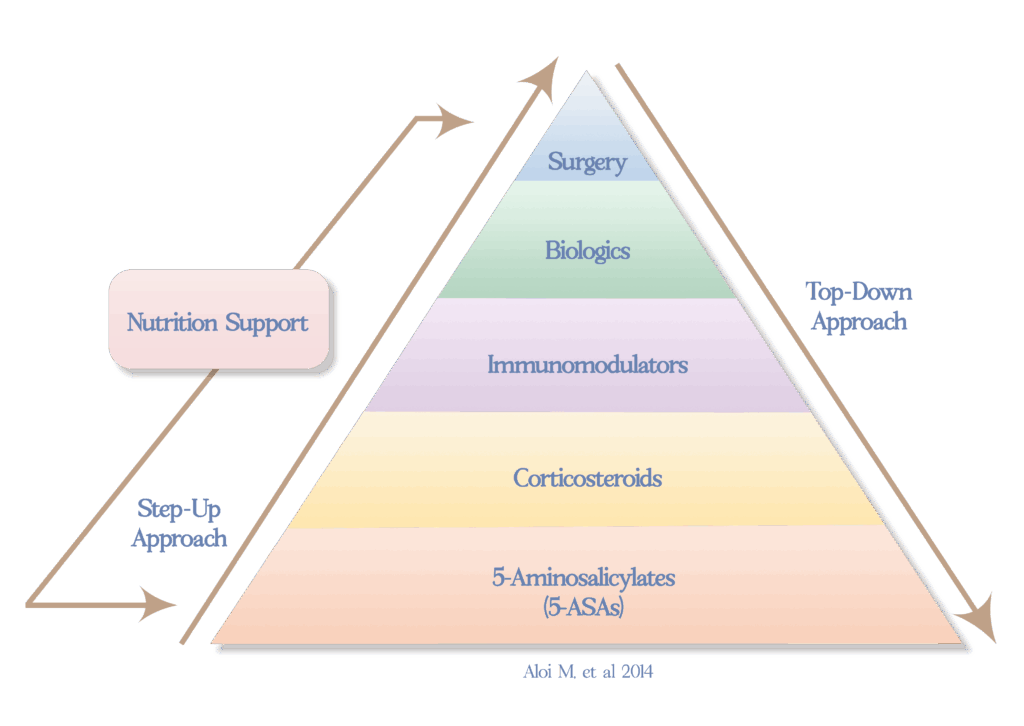
The pyramid shows the main categories of IBD medications.
Doctors choose the best approach based on factors like: type of IBD, severity of inflammation, age, & other considerations.
Traditionally, a step-up approach has been followed, starting with lower-intensity medications & progressing upward if necessary. However, in certain cases, doctors may choose a top-down approach, initiating treatment with stronger medications from the beginning.
Alongside these medical approaches, nutrition support plays a significant role in each treatment option by:
- enhancing medication efficacy
- alleviating symptoms
- improving quality of life
- reducing the frequency of relapses & the risk of other diseases
- optimizing nutrition pre and post-surgery is crucial for maximizing treatment outcomes
Additionally, some IBD medications can impact nutrient absorption, underscoring the importance of nutrition support in conjunction with medical treatment.
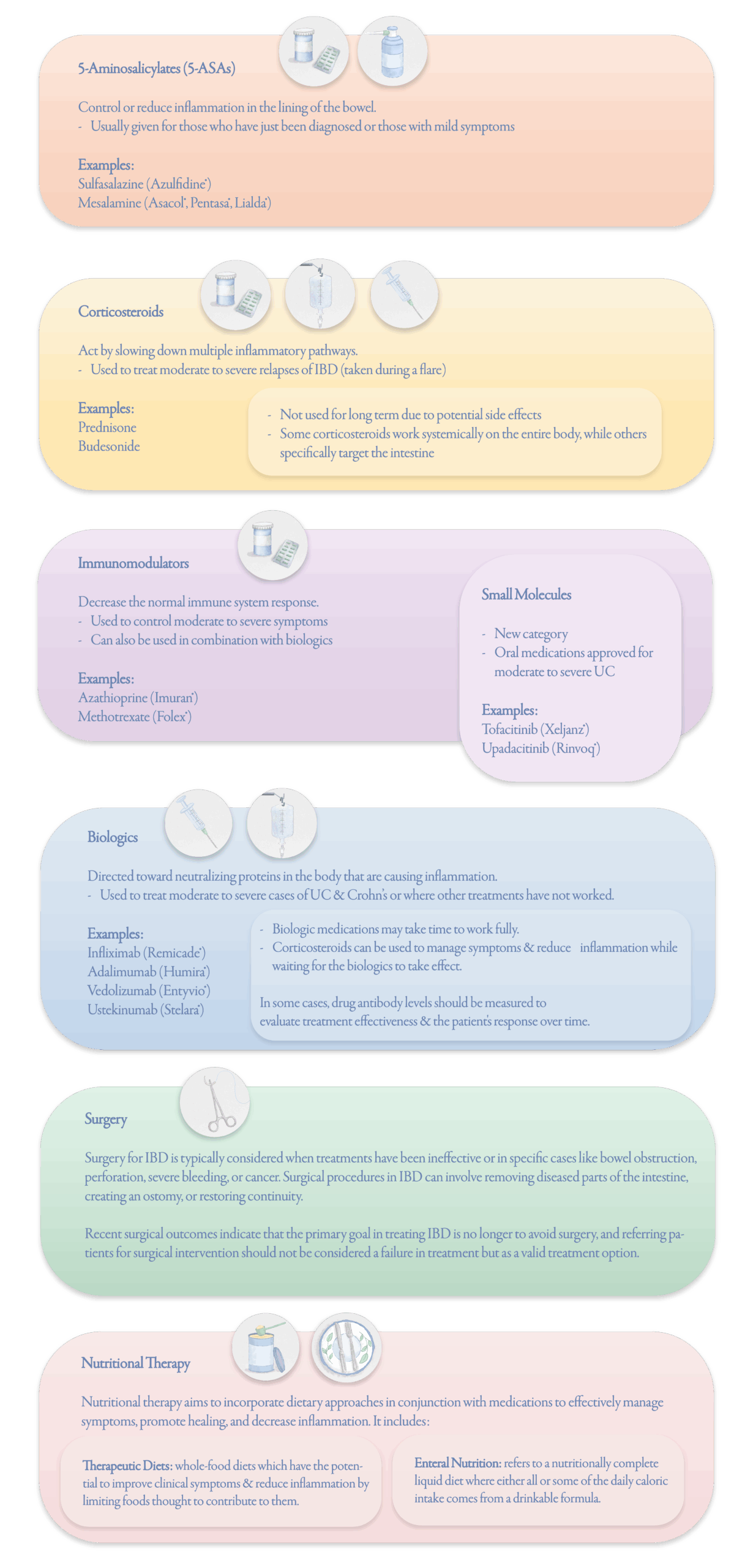
It’s important to note that there is currently no known cure for IBD.
IBD medications are generally safe, but regular monitoring of liver, kidney function, and nutrient levels is necessary. Treatment options can vary, so it is very important to have a multidisciplinary team to assess and determine the best course of action for patients.
Additionally, working with an IBD-focused dietitian can help you explore how nutrition therapy can complement your treatment plan as an adjunct therapy.
Please note that the information provided is for educational purposes only and should not be considered as medical advice or a prescription for any specific medication.
References
- Aloi M, Nuti F, Stronati L, Cucchiara S. Advances in the medical management of paediatric IBD. Nat Rev Gastroenterol Hepatol. 2014 Feb;11(2):99-108. doi: 10.1038/nrgastro.2013.158. Epub 2013 Aug 20. PMID: 23958601.
- Bemelman WA; S-ECCO collaborators. Evolving Role of IBD Surgery. J Crohns Colitis. 2018 Jul 30;12(8):1005-1007.
- Zurba Y, Gros B, Shehab M. Exploring the Pipeline of Novel Therapies for Inflammatory Bowel Disease; State of the Art Review. Biomedicines. 2023 Mar 1;11(3):747. doi: 10.3390/biomedicines11030747. PMID: 36979724; PMCID: PMC10045261.
- Reznikov EA, Suskind DL. Current Nutritional Therapies in Inflammatory Bowel Disease: Improving Clinical Remission Rates and Sustainability of Long-Term Dietary Therapies. Nutrients. 2023; 15(3):668.
- Turner D, Ricciuto A, et al.; International Organization for the Study of IBD. STRIDE-II: An Update on the Selecting Therapeutic Targets in Inflammatory Bowel Disease (STRIDE) Initiative of the International
- Organization for the Study of IBD (IOIBD): Determining Therapeutic Goals for Treat-to-Target strategies in IBD. Gastroenterology. 2021 Apr;160(5):1570-1583.


